

 OktaHound is an OpenGraph extension and data collector for Okta Platform (also known as Okta Workforce Identity Cloud) environments that helps security professionals visualize and analyze their Okta configurations in BloodHound.
It collects data about users, groups, applications, roles, and other entities within an Okta organization and represents them as nodes and edges in BloodHound’s graph database.
OktaHound is an OpenGraph extension and data collector for Okta Platform (also known as Okta Workforce Identity Cloud) environments that helps security professionals visualize and analyze their Okta configurations in BloodHound.
It collects data about users, groups, applications, roles, and other entities within an Okta organization and represents them as nodes and edges in BloodHound’s graph database.
The other main product in Okta’s portfolio is Auth0 (previously known as Customer Identity Cloud). OktaHound does not currently support Auth0.
Okta Attack Paths
Okta is an interesting target for attackers because it is widely used by organizations to manage access to their cloud and on-premises applications. Compromising an Okta organization can provide attackers with access to a wide range of resources and data. Okta organizations seem to be secure by default. Multi-factor authentication (MFA) is enforced for all users and re-authentication is required for sensitive administrative tasks.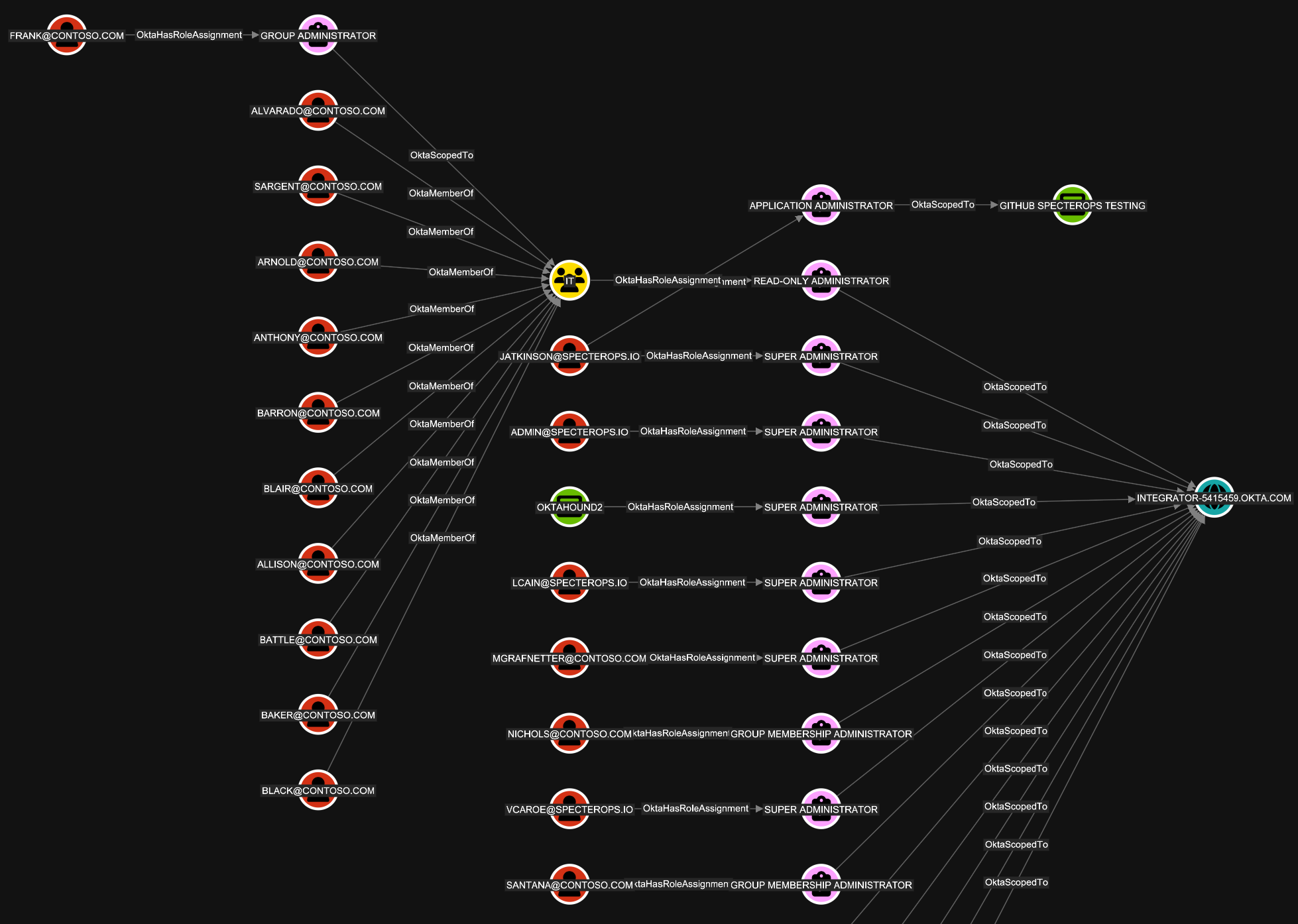
Our research on Okta attack paths is still ongoing. Interesting mappings to MITRE ATT&CK are available from Elastic.
Okta Free Trial
Okta provides a free trial plan that you can use to test the majority of OktaHound features.References
The following blog posts provide insights into Okta attack vectors and techniques:- Adam Chester (SpecterOps): Identity Providers for RedTeamers
- Eli Guy (XM Cyber): Attack Techniques in Okta - Part 1 - A (Really) Deep Dive into Okta Key Terms
- Eli Guy (XM Cyber): Attack Techniques in Okta - Part 2 - Okta RBAC Attacks
- Eli Guy (XM Cyber): Attack Techniques in Okta - Part 3 - From Okta to AWS Environments
- AppOmni: Okta PassBleed Risks - A Technical Overview
- Luke Jennings (PushSecurity): Abusing Okta’s SWA authentication
- David French (Elastic): Testing your Okta visibility and detection with Dorothy and Elastic Security
Research Tools
Here are some interesting GitHub repositories related to Okta security research:Community
Please join us in the#okta channel of the BloodHound Community Slack workspace if you want to chat about attack paths in Okta or the usage of OktaHound. You are also welcome to open an issue or pull request on GitHub.